
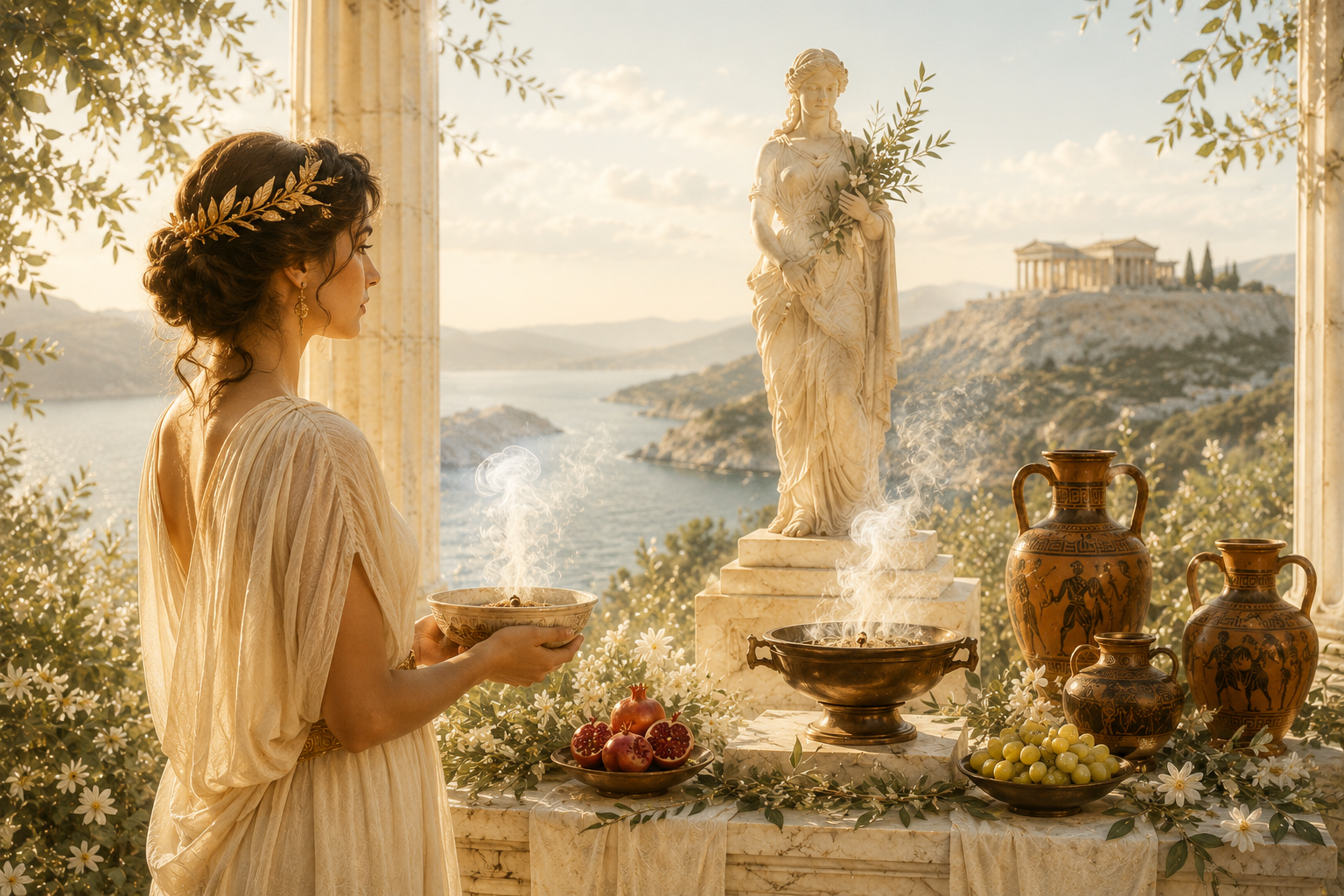
I’ve always been fascinated by the Eleusinian Mysteries.
There’s something incredibly compelling about the fact that this was one of the most sacred festivals of the ancient Greek world, celebrated for centuries, and yet we still don’t really know what happened.
The initiates kept the Mysteries secret.
They didn’t write down what they experienced. They didn’t reveal the sacred rites. And because of that, thousands of years later, we’re left with fragments, clues, philosophy, archaeology, and our own interpretations of what may have taken place.
And I kind of love that.
The myth at the heart of the Mysteries — Demeter losing Persephone to Hades, searching for her, and eventually being reunited with her — has infinite depth.
On one level, it’s a myth about the changing seasons and the cycles of the land.
But go deeper, and it can become a story about the human soul, incarnation, descent into the material world, the the lessons we accumulate through our different lifetimes, and ultimately, about our spiritual evolution and ascension back towards the Gods.
This is one of the interpretations of the Eleusinian Mysteries that has always resonated with me, particularly through the Orphic and Neoplatonic ways of understanding Greek spirituality.
And it’s also why, here in Cyprus, we wanted to honour this sacred time of year without pretending that we could recreate the Eleusinian Mysteries themselves.
The Mysteries belonged to Eleusis.
So, a few years ago, we asked the YSEE headquarters in Athens for permission to create a festival of our own for September, aligned with the YSEE Greek Wheel of the Year.
We called it Persefonia, in honour of Persephone’s descent into Hades.
I love this festival because, to me, it represents what living Hellenism actually means.
We honour the ancient tradition. We respect what belongs to particular places and historical practices. But we also allow the religion to continue living, breathing, and evolving rather than treating it as something frozen in antiquity.
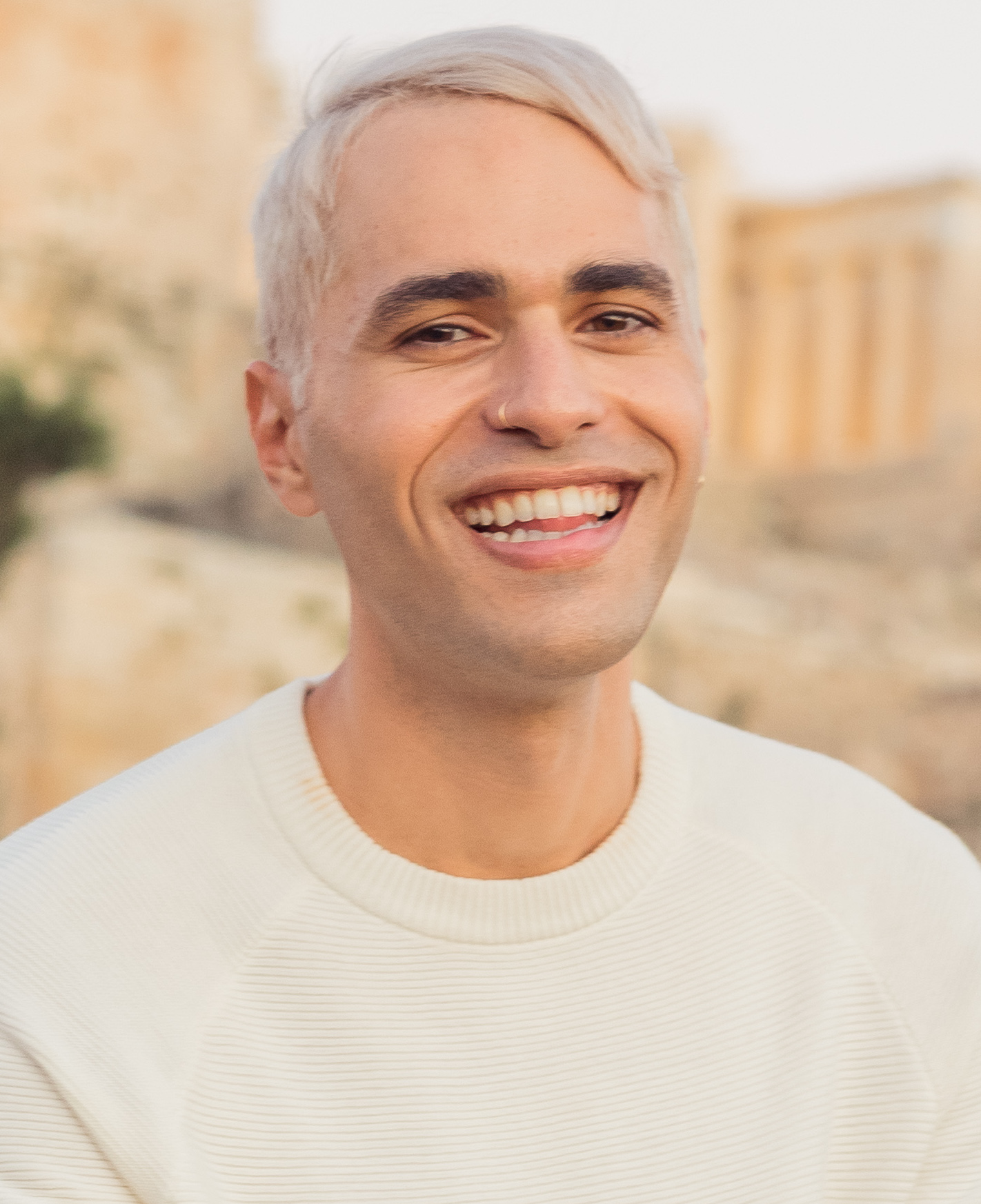
In the new episode of the Living Hellenism podcast, Elyse and I explore all of this.
We talk about the autumn equinox and Persephone’s descent, what may have happened during the Eleusinian Mysteries, the deeper spiritual meaning of the Demeter and Persephone myth, and why Hephaestus is the patron God of September.
We also explore Hephaestus as the God of creative and cosmic fire, technology, discipline, industriousness, and resourcefulness — energies that become especially important as the days shorten and we begin turning inward for the darker part of the year.
If you’ve ever been fascinated by the Eleusinian Mysteries, Persephone, Demeter, or the deeper mystical teachings hidden within Greek mythology, I think you’re going to love this conversation.
Listen to the new episode of Living Hellenism: September, Persefonia & the Eleusinian Mysteries.
You can also download your free Living Hellenism Starter Kit, which includes the Greek Wheel of the Year and resources to help you connect with the gods and festivals of each month.
If you’re ready to take your manifestation practice to the next level, be sure to get my book Ancient Manifestation Secrets, teaching you a brand-new method of manifesting with the energy field.
Are you ready for a new spiritual journey? Take this 2-minute quiz to find out what your next spiritual transformation will be about.
Recommended for you




Haven't found your life purpose yet?
Sign up below to download my FREE step-by-step guide to find and define your life purpose in a specific two-paragraph definition. You'll also receive a weekly email from me packed with intuitive guidance, spiritual processes, and exclusive trainings to support your journey.